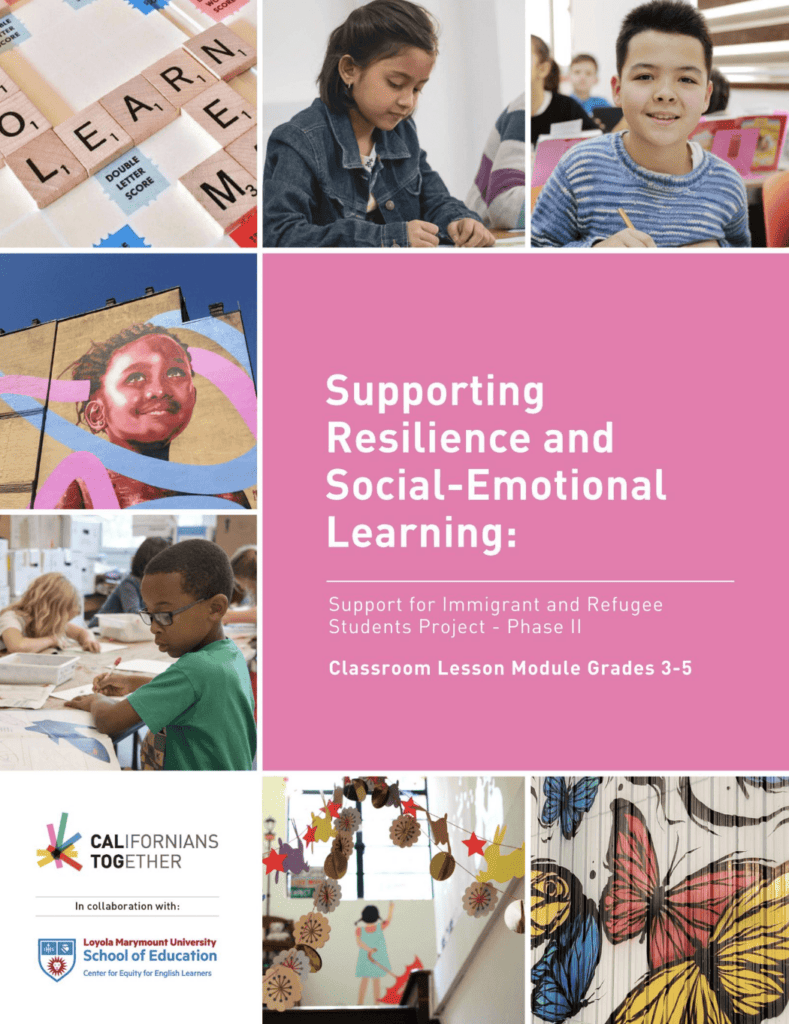
Phase II – Support for Immigrant and Refugee Students (SIRS) Curriculum
What is Resilience?
Resilience is the ability to adapt and recover from adversity, trauma, or significant stress. It’s not a rare trait—people build resilience through everyday experiences, even in the face of deep emotional pain.
Resilience involves behaviors and skills that can be learned by anyone. Teaching these skills is especially important for students who have faced trauma, such as immigrant and refugee children entering U.S. schools.
The Impact of Trauma
Many newcomer students have experienced fear, loss, or displacement. Trauma can affect their ability to think, learn, and connect with others.
“Trauma is an event or experience that causes lasting harm to a person’s mental, emotional, or physical well-being.”
— Guidance for a Trauma-Informed Approach
About the SIRS Curriculum – Phase II
Building on Phase I, which focused on emotional expression and classroom community, Phase II introduces tools to help students manage emotions and feel safe—key elements of a trauma-informed approach.
The lessons are designed around five core principles:
- Safety
- Trust
- Collaboration
- Empowerment & Choice
- Cultural Responsiveness
Lesson Highlights
- Lesson 1 helps all students, especially those with trauma, manage emotions during stress.
- Lesson 2 fosters empathy and understanding of immigrant and refugee experiences.
Aligned with the CASEL framework for Social and Emotional Learning, these modules build essential skills for navigating daily challenges with confidence and compassion.